Learning Outcomes
i. Define the concept of cloning and distinguish between its different types.
ii. Describe the scientific techniques involved in cloning organisms.
iii. Discuss the ethical considerations surrounding cloning.
iv. Explore the potential applications of cloning in various fields.
i. Definition of Cloning:
The process of creating genetically identical copies of biological matter—this can include genes, cells, tissues, or entire organisms.
Types of Cloning
Reproductive Cloning: Produces copies of whole animals.
Therapeutic Cloning: Involves the cloning of embryonic cells for use in medical treatments and research.
Gene Cloning: The process of creating copies of specific genes or segments of DNA.
ii. Scientific Techniques
Somatic Cell Nuclear Transfer (SCNT): The most common technique used in reproductive cloning where the nucleus of a somatic cell is transferred to an egg cell that has had its nucleus removed.
Cellular Cloning: The process of producing identical cells in vitro for research or medical use.
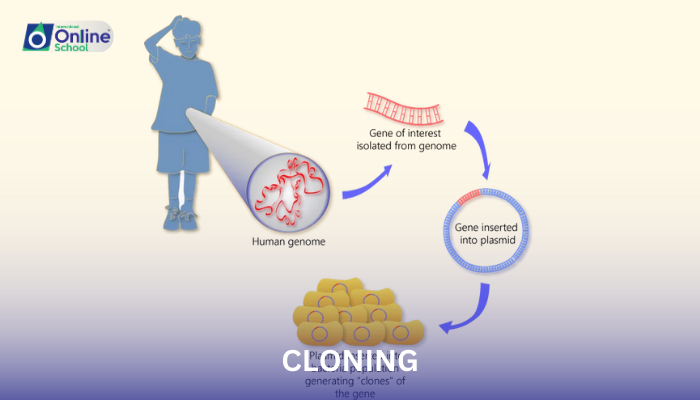
DNA Cloning: Involves the use of recombinant DNA technology to create multiple copies of a piece of DNA, such as a gene.
iii. Ethical Considerations
Moral Implications: Concerns about the morality of creating life artificially and the status of cloned organisms.
Safety: Issues related to the health and welfare of cloned animals, as well as potential risks to human health.
Diversity and Natural Processes: Debate over the impact of cloning on genetic diversity and the alteration of natural reproductive processes.
iv. Potential Applications
Agriculture: Cloning can be used to produce animals with desirable traits, improving food production efficiency.
Medicine: Therapeutic cloning holds promise for regenerating tissues and organs, potentially treating a wide range of diseases.
Conservation: Cloning endangered species could help to increase population numbers and genetic diversity.
In conclusion, cloning encompasses a range of techniques aimed at producing genetically identical copies of biological entities. While the potential applications of cloning offer significant benefits, ethical considerations play a crucial role in the debate over its widespread use. The ongoing discussion encompasses moral, safety, and ecological aspects, highlighting the complexity of integrating such advanced technologies into society. Understanding cloning's concepts, processes, and implications is essential for informed discourse on its role in the future of science and ethics.
